
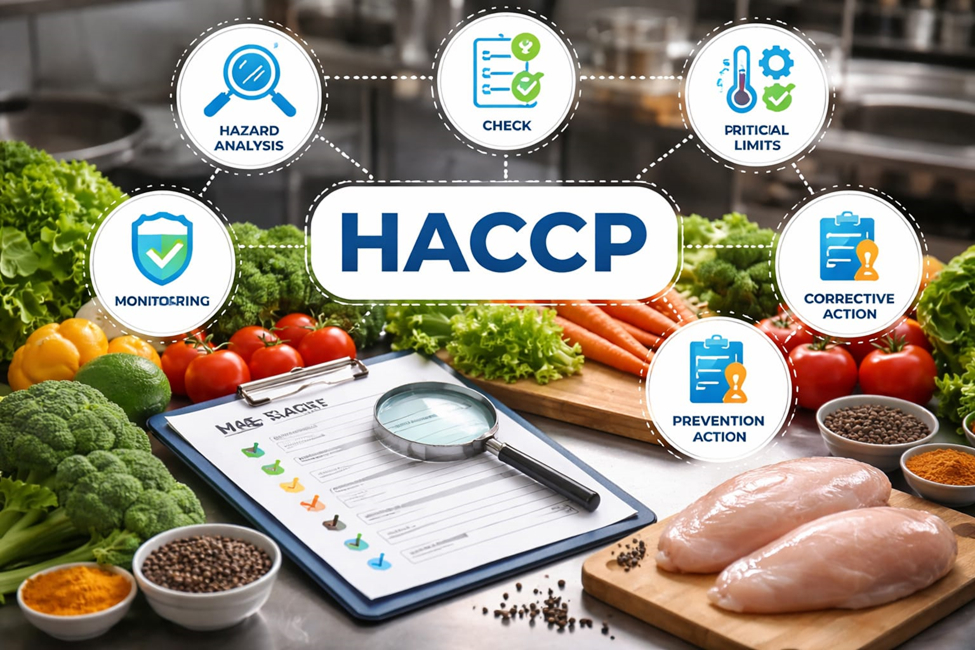
HACCP (Hazard Analysis and Critical Control Points) is a systematic preventive approach to food safety and quality. It identifies potential hazards in the production process and implements controls to ensure products are safe for consumption. HACCP is recognized internationally as a key standard for maintaining high safety and quality standards



Gap Analysis
We review your current processes against ISO 9001 requirements to identify gaps and improvement areas.
1
2
Pre-Assessment
A preliminary evaluation is conducted to ensure your system is aligned with ISO standards before the formal audit.
Internal Audit & Training
Internal audits are performed and staff are trained to ensure readiness for certification.
3
4
Final Certification Audit
An accredited auditor performs the official assessment to verify full compliance with ISO requirements.
Certification Awarded
Upon successful audit completion, your organization receives an internationally recognized ISO certificate.
5
6
Ongoing Support
Surveillance audits ensure ongoing compliance and continuous improvement.
Improve product quality and reduce waste
Win large-scale projects
Enhance patient care
Deliver reliable, consistent services
Improve supply chain and customer satisfaction
Ensure safety and operational reliability
Maintain product safety and customer trust
Enhance guest satisfaction through safe food practices
Organizations seeking HACCP Certification in UAE should establish and maintain a documented food safety system based on HACCP principles.
Organizations with established quality or food safety systems may require less implementation effort, resulting in lower certification costs.
Callids Global offers customized and affordable HACCP certification solutions tailored to your business requirements.
Food safety is essential for protecting consumers, maintaining regulatory compliance, and building long-term business success. HACCP Certification in UAE provides a proactive and internationally recognized approach to identifying and controlling food safety hazards throughout the supply chain. With expert support from Callids Global, organizations can establish a robust HACCP system, improve operational efficiency, enhance customer confidence, and achieve sustainable growth in the highly competitive food industry. By implementing HACCP, businesses demonstrate their commitment to delivering safe, high-quality food products while meeting the highest standards of food safety and compliance.
Requirements may vary depending on industry regulations and customer expectations, but HACCP is widely recognized as a leading food safety framework.
Contact Callids Global today for a free consultation & quote.
Callids Global is an accredited certification body that issues internationally recognized accredited certificates to companies in a wide range of manufacturing and service industries attesting to compliance with various national and international regulatory standards.
Check the authenticity of any ISO certificate in just one click.
UAE
M Floor, Remah Towers, Al Khalidiyah,
Abu Dhabi, United Arab Emirates
INDIA
Senate Space, UR Nagar Extension, Anna Nagar West Extn, Chennai, Tamil Nadu, India - 600050
UNITED STATES
Registered Accreditation Office 8 The Green, Dover, DE, 19901, United States
Copyright © Callids Global 2023